Potassium is an electrolyte that helps nerves and muscles, including the heart, to function, so
it is important to keep levels in the body within a healthy range.
Potassium imbalances are common in CKD cats.
Low potassium levels (hypokalaemia) occur in around 30% of CKD cats. The
most usual treatment is an oral potassium supplement.
High potassium levels (hyperkalaemia) occur in around 13% of CKD cats, who
usually have more advanced CKD. These are harder to manage, but there are
a few possible treatments.
Why Potassium Imbalances Are Important
Potassium is an electrolyte (body salt) that acts in concert with sodium within the
body. It is used at cellular level,
and two of its most important functions are to help muscles function
smoothly, and — since the heart is a muscle — to help regulate the heart
rhythm.
They can damage the kidneys and may make
the CKD progress more quickly. They may also contribute to the development
of
hypertension
and metabolic acidosis;
conversely,
metabolic acidosis may also be a factor in the development of low
potassium levels:
Chronic kidney disease (2007) Polzin D
Delaware Valley Academy of Veterinary Medicine states "acidosis is
a major risk factor for the development of hypokalemia."
High potassium
levels are known as hyperkalaemia.
They may also cause heart problems, which in the worst case could result
in heart failure.
Therefore it is essential to monitor your cat's
potassium levels regularly and to treat any imbalances which may arise.
Strangely, however, many laboratories do not seem to measure potassium
levels routinely. Check your cat's bloodwork (it may be shown as
potassium, pot or K+) and ask for it to be measured whenever you run
routine bloodwork. If your cat has a potassium imbalance, it will need to
be measured more regularly (see
below) until the
imbalance is resolved.
Potassium imbalances are quite common in CKD cats. In the earlier stages of CKD, potassium levels are usually too low
because potassium is lost in the increased urination and vomiting commonly
seen in CKD cats.
Feline renal failure: questions, answers, questions (1992) Lulich JP, Osborne CA, O’Brien TD and Polzin DJ Compendium on Continuing Education for the
Practising Veterinarian 14 pp127-153 estimated that
approximately 30% of CKD cats have low potassium levels.
However, in
cats whose CKD is relatively advanced (IRIS
stage 4, with creatinine over 5 mg/dl US or over 440 mmol/L
international), the opposite problem may occur and potassium levels may
become too high.
Evidence-based step-wise approach to managing
chronic kidney disease in dogs and cats
(2013) Polzin DJ Journal of Veterinary Emergency
Critical Care (San Antonio) 23(2) pp205-15 states "hypokalemia is
less common among cats with IRIS CKD Stage 4 seemingly because the marked
reduction in glomerular filtration rate (GFR) is more likely to promote
potassium retention and hyperkalemia." Thomas had this problem towards the end, when his creatinine was over 7
mg/dl (620 µmol/l) for about
a month and he did develop extremely high potassium levels during his last
few days.
Occasionally hyperkalaemia is also seen in cats with less severe CKD. The
study mentioned above (Lulich et al., 1992) found that around 13% of CKD
cats have hyperkalaemia.
Measuring Potassium Levels
A blood test
will tell your vet if your cat's potassium level is too low or too high.
However, sometimes the level may look artificially high or artificially
low:
If the sample
is
haemolysed
(the blood cells in the sample have ruptured), the potassium level may
look higher than it actually is, though occasionally it will look lower
than it actually is.
If the sample
has sat around for a while before being tested, the potassium level may
look artificially high.
A cat with a
very high white blood cell count, perhaps because of infection, may have
artificially low potassium levels.
In a cat with
metabolic acidosis,
the potassium level may appear normal or high in blood tests, but may
subsequently fall after the metabolic acidosis is treated.
Potassium levels may
sometimes appear to be normal in blood tests when in fact there is a
potassium deficiency in the body.
Dr D
Polzin states in
Chronic kidney disease (2007)
Delaware Valley Academy of Veterinary Medicine "muscle potassium
content decreased in normokalemic cats with spontaneous CKD, indicating
that a total-body deficit of potassium may develop well before the onset
of hypokalemia." This is because, although potassium is used in the
body's cells, the regulatory mechanism of the body is actually set to
maintain a certain level of potassium in the blood, not the cells. Thus,
when potassium levels drop, as they tend to do in early stage CKD, the
cat's body will try to maintain levels of potassium in the blood by taking
potassium from the cells. This means that at the intracellular level
where the potassium is really needed, potassium levels are too low, even
though the blood levels of potassium may appear to be normal.
There are a
number of tests available for humans to test potassium at the
intracellular level. One is the
Exa Test,
which requires a buccal sample (from the cheek inside the mouth). I only
know of one person who has had potassium checked at the intracellular
level, but unfortunately he cannot remember which company his vet used.
Goal for Potassium Level in Bloodwork
Potassium is usually measured in either
mEq/l (USA) or mmol/l (international). However, in practice the numbers
are the same value for potassium, e.g. 4
mEq/l is the same as 4 mmol/l.
Although laboratories vary, most have a range around 3.5 to 5.5. Ideally
though:
Your cat's potassium level needs to be firmly in the middle, at
around 4.4, but definitely above 4.
What is too low a level?
Hyperaldosteronism in cats (2011)
Schaer M NAVC Clinician's BriefNov 2011
says "Serum potassium values of less than 3.0 mEq/L may have adverse
effects on the skeletal and cardiac muscles," though you may certainly
see symptoms before the potassium level falls that low.
Managing fluid and electrolyte disorders in renal
failure (2008) Langston C
Veterinary Clinics Small Animal Practice38 pp677–697 says "a concentration of less than 2.0 mEq/L may be life threatening."
Fortunately it is extremely rare for a CKD cat to have such a low
potassium level.
What is too high a level?
Ideally you do not want it to go above 6.0,
according to
2013 AAHA/AAFP fluid therapy guidelines for dogs and
cats (2013) Davis H, Jensen
T, Johnson A, Knowles P, Meyer R, Rucinsky R & Shafford H Journal of
the American Animal Hospital Association49(3) pp149-159, which
talks about treatment when "life-threatening hyperkalemia is either
suspected or present (K 6 mmol/L)."
Above 6.5 is definitely a problem, considering that high potassium levels
may cause seizures and even a heart attack.
Above 6.5 is definitely a problem,
considering that high
potassium levels may cause seizures and even a heart attack.
Management of potassium disorders
(2014) Odunayo A Clinician's BriefMarch 2014 pp69-72
says "Although there is no consensus for treatment of hyperkalemia,
veterinary patients with acute serum potassium concentrations greater than
6.5 mEq/L or with ECG changes suggestive of hyperkalemia are typically
treated."
Most CKD cats with potassium imbalances have low potassium levels because
potassium is lost from the body via the increased urination and
vomiting commonly seen in CKD. Not eating may worsen hypokalaemia
because the cat is not taking in potassium that could help offset that
lost via urination.
There are some other possible causes
or risk factors, as
follows:
Metabolic
Acidosis
Cats with low potassium levels are prone to metabolic acidosis, but
metabolic acidosis also increases the chances of developing low potassium
levels.
Chronic kidney disease (2007) Polzin D
Delaware Valley Academy of Veterinary Medicine states "acidosis is
a major risk factor for the development of hypokalemia."
Retrospective study of the efficacy of oral potassium supplementation in
cats with chronic kidney disease (2020) Sieberg L & Quimby J Journal of Feline
Medicine and Surgery22(6) p539-543 says "chronic metabolic
acidosis associated with CKD encourages intracellular potassium depletion
due to intracellular influx of excess hydrogen ions and concomitant efflux
of potassium."
Another
possible cause for CKD cats is
amlodipine,
a medication commonly used to treat hypertension.
Chronic kidney disease (2007)
Polzin D
Delaware Valley Academy of Veterinary Medicine says "amlodipine
may promote hypokalemia in cats with chronic renal insufficiency/failure."
Hyperaldosteronism
Very occasionally, low potassium
levels may be caused by a condition known as hyperaldosteronism.
This may make the CKD progress faster, so it is important to treat it if
present. It is more common in cats with
hyperthyroidism.
Aldosterone is a hormone which regulates sodium and potassium levels in the blood. In
cats with hyperaldosteronism, too much aldosterone is produced. In primary
hyperaldosteronism, this is usually
because of a benign tumour on the adrenal glands (in which case it is
known as Conn's disease). In secondary
hyperaldosteronism, the problem arises somewhere other than the adrenal
glands.
The excess aldosterone production means the cat develops low
potassium levels and high
sodium levels which
eventually lead to hypertension
(high blood pressure).
If your cat has low potassium levels and
low magnesium
levels, and the potassium does not rise even after treating the low
magnesium levels, ask your vet to rule out hyperaldosteronism, especially if your
cat has hypertension. An ultrasound of the adrenal glands may assist with
diagnosis.
Treatment is
the same as for CKD cats with these problems, i.e. potassium supplements
and medication to control the high blood pressure, though surgery to
remove the affected adrenal gland is also an option in some cases, and may
completely resolve the problem for some cats. Occasionally a
diuretic
called spironolactone is used
because spironolactone is an aldosterone receptor blocker, which helps the
body retain potassium (hence spironolactone is sometimes referred to as a
potassium-sparing diuretic), though diuretics can be tricky for CKD cats,
who are already prone to increased urination.
Primary hyperaldosteronism in the cat: a series of
13 cases (2005) Ash RA, Harvey AM
& Tasker S Journal of Feline Medicine and Surgery7(3) pp173-82 states that "it is recommended that primary
hyperaldosteronism should be considered as a differential diagnosis in
middle-aged and older cats with hypokalaemic polymyopathy and/or systemic
hypertension and should no longer be considered a rare condition."
Hyperaldosteronism in cats
(2014) Niessen SJM Presentation to the World Small Animal
Veterinary Association World Congress discusses hyperaldosteronism.
Feline hyperaldosteronism
Krista E Iowa Veterinary Specialties has a good
overview of hyperaldosteronism.
Less common feline endocrinopathies
(2004) Jones BR Presentation tothe World Small Animal Association
World Congress 2004 has information about
hyperaldosteronism in the last section.
Inherited Hypokalaemia (Burmese Cats)
Some cats may
develop an inherited form of low potassium levels, though this appears to
only affect Burmese, Bombay and Tonkinese cats outside the USA.
Pet Place explains more about this.
Periodic hypokalaemic polymyopathy in Burmese and closely related cats: a
review including the latest genetic data (2015) Malik R, Musca
FJ, Gunew MN, Menrath VH, Simpson C, Culvenor J, Grahn RA, Helps C, Lyons
LA & Gandolfi B Journal of Feline Medicine and Surgery17(5)
pp417-26 says "The underlying pathomechanism in affected cats is
therefore
likely to be a potassium wasting nephropathy, as this enzyme is involved
in complex sodium/potassium exchange mechanisms in the kidney." In most
cases, the problem appears at a young age, below the age of ten months,
and some of them seem to "grow out of it" it at around 1-2 years of age.
Langford Veterinary Services in the UK
(owned by the University of Bristol which participated in the above research into this problem) can perform a genetic test from a
mouth swab to test for this condition.
Symptoms of Low Potassium
Levels
Here are the most common symptoms of low
potassium levels. Rather confusingly, two of them (twitching and
lethargy) may also be symptoms of
high potassium levels.
As you can see, since potassium is important for nerve and muscle
function, the symptoms seen usually affect nerves or muscles. When the
muscles are severely affected, it is known as hypokalaemic polymyopathy.
Weakness may be
seen in the back
legs. This is a common symptom of low potassium levels. You may
also see a plantigrade posture, where the cat walks on his/her hocks
instead of his/her feet, like Ollie to the left. His back half also seemed
to sway when he walked. This photo was taken a day after he came
to live with us, a week before his 16th birthday.
Ollie saw the vet that day and since
his potassium level was at the very bottom of the range (3.5 mmol/L), she started him on a potassium
supplement — he had his first dose just after this photo was taken. There
was improvement within 24 hours, and within 48 hours he was walking
normally again.
A
plantigrade stance can have other causes. It is most likely to occur in
diabetic cats, caused by
diabetic neuropathy.
Long Beach Animal Hospital has a photograph of a cat with
diabetic neuropathy doing this (click on Symptoms).
Newman Veterinary
has a good before and after photo of a diabetic cat with this
problem,
scroll down a little to Other Common
Consequences, then click on Plantigrade Stance (in red font).
The Mayo Clinic
has some information about
peripheral neuropathy, including that caused by diabetes.
Back leg
weakness and/or a plantigrade stance may also be caused by
high phosphorus
levels which interfere with the nerve messages
that control the limbs, a condition known as peripheral neuropathy. Occasionally
the cause is low magnesium or
low calcium levels.
General weakness may be caused by
anaemia, or because
the cat is simply not eating enough. It is essential that cats eat,
because if they do not eat, they are at risk of developing a potentially
life-threatening condition called
hepatic lipidosis;
Mar Vista Vet
has more information about this.
Therefore, it is important to try to find the cause and treat it as
quickly as possible.
If your cat no longer jumps, this may be thought
to be weakness when in fact it is an unwillingness to jump because of
blindness caused by
hypertension. An inability to
jump or climb may also be caused by
arthritis.
Stilted Gait in the Front Legs
This is
usually a sign of low potassium levels.
Stiff Neck or Inability to Hold Up Head
(Cervical Ventroflexion)
The cat may
be unable to raise his or her head properly, like Pixel in the photo to
the left.
Long Beach Animal Hospital
also has a photograph of a cat with this problem
— scroll down to find the photograph.
In most CKD cats, this is a symptom of
potassium deficiency, but very occasionally it may be a sign of
vitamin B1
(thiamine) deficiency, which is sometimes seen in cats fed
too much fish.
Here
is Pixel to the right looking much better after four days of treatment!
Suki's ventroflexion has a photo of
Stacey's Suki with this problem, together with a photo taken four days
later showing how it resolved following treatment. Stacey had thought it
might be time to say goodbye to Suki, so was thrilled to discover that
this rather frightening symptom is actually treatable.
Hoarseness
This can be
caused by low potassium levels adversely affecting the
vocal chords. Alternatively, this is sometimes a sign of
gastric hyperacidity. If
accompanied by coughing, consider the possibilities of
fluid build-up and/or
heart problems.
One
peculiarity which you may see is nocturia, or excessive urination during
the night, which may be caused by low potassium levels. Another possible
cause is
calcitriol. If you only give
your cat sub-Qs late at night, this might also be the cause.
This may be
a sign of low or high potassium levels,
anaemia or
hypertension.
Lethargy may sometimes be a sign of
heart problems, especially if it appears after giving fluids.
Loss of Appetite
Low
potassium levels may be a factor in a cat having a poor appetite.
Cats who do
not eat are at risk of developing a potentially life-threatening condition
known as hepatic lipidosis;
Mar Vista Vet
has more information about this. Therefore, it is important to try to find the cause of the inappetance and
treat it as quickly as possible.
Treating Low Potassium Levels
Managing fluid and electrolyte disorders in renal
failure (2008) Langston C
Veterinary Clinics Small Animal Practice38 pp677–697 says
"Because normalization of hypokalemia can improve renal function and
decrease clinical signs, treatment of hypokalemia should not be
overlooked."
When to Start Treatment
When do you need to consider treatment?
11 guidelines for conservatively treating chronic
kidney disease
(2007) Polzin D
Veterinary MedicineDecember 2007 states "Intervention
to manage serum potassium concentrations is indicated in dogs and cats
when the concentrations fall outside the target range of 3.5 to 5.5 mEq/L,
regardless of the chronic kidney disease stage."
It
may in fact be appropriate to treat when your cat's potassium level
falls below the middle of the normal range. For most laboratories, this
would mean treatment for cats whose potassium level is below 4.0
mEq/L US or 4.0 mmol/l international. The
reason for this is that if it is impossible to keep potassium levels in the
blood at the middle of the normal range, it must be because the cells are depleted
to such an extent that they cannot release any more potassium into the
blood.
Since hypokalaemia may
damage the kidneys and make the CKD progress more quickly, as well as
contribute to the development of both metabolic acidosis
and hypertension, it
is wise to be proactive when faced with low potassium levels.
I have personal
experience of this. My Ollie had a
potassium level of 3.5 mmol/L at diagnosis, which was technically within range,
so initially my vet felt he did not require supplementation. However, he could barely walk (see the photo
above), so my vet
started him on a potassium supplement and within two days he could walk
normally again. One member of Tanya's CKD Support Group was considering
euthanasia when her cat's potassium level was at 3.5
mEq/L because he could barely walk and was extremely lethargic, but he
returned to his normal self once his potassium levels increased with
supplementation.
Therefore I
personally would want to supplement any cat with potassium below 4
mEq/L or mmol/L. It is not only I who favours treating cats whose
potassium level falls below the middle of the normal range.
Chronic renal failure in the cat
(2006) Sparkes A Presentation to the World Small Animal
Veterinary Association World Congress states "Potassium
concentrations should be monitored regularly in cats with CKD and if they
fall below 4 mmol/l, supplementation with potassium salts is recommended."
Finding the right balance: medical management of
renal patients (2014) Vaden SL Eukanuba Veterinary Diets Clinical Symposium,
Norway says
"Potassium supplementation should be considered in cats that do not
maintain a serum potassium >4.0 mEq/L while consuming a renal diet."
Therapeutic kidney diet foods contain additional potassium. For mild hypokalaemia,
this
may be enough to resolve the problem.
Fluid Therapy
Some types of sub-Q fluids also contain additional potassium, e.g.
lactated ringers solution (LRS). This may be sufficient to help cats with
mild hypokalaemia.
For cats with a severe potassium deficiency,
intravenous fluids,
which are given in hospital to severely dehydrated cats, may be necessary.
If required, additional potassium can be added to intravenous fluids by
the vet. This type of treatment can improve potassium levels quite
quickly.
Managing fluid and electrolyte disorders in renal
failure (2008) Langston C
Veterinary Clinics Small Animal Practice38 pp677–697 has a
table indicating how much potassium should be supplemented depending upon
the severity of the hypokalaemia.
If your cat is placed on intravenous fluids with added potassium, do not
panic if the potassium level falls further when treatment is first begun.
Dr Langston states "Serum potassium concentration may decrease during initial
fluid
therapy despite supplementation because of extracellular fluid volume
expansion, increased distal renal tubular flow,
and cellular uptake." This should improve as the treatment continues.
Potassium Supplements
If additional treatment is necessary, a potassium supplement may also be
given. These supplements are usually given at home on an ongoing basis. They may be given orally, or as an injectable into the sub-Q
fluids bag, though this can make the fluids sting. Please see
above for when to start.
Unfortunately,
oral potassium supplements can make some cats vomit more — after all,
potassium is a type of salt, and salt would give anyone a stomach upset if
taken neat. Supplements may also cause diarrhoea in some cats.
Therefore the first thing to do is to try to spread the daily dose out over several
meals and to mix it in with foods if possible.
The formulation you use can also make a difference. I hear a lot of complaints about cats loathing the gel form of potassium, so I would avoid that if you can. Most
people find the powder form or crushed pills easiest to use, because the
daily dose can be spread over several meals.
If the problem persists, consider changing the brand you are using in case
that helps.
Alternatively, if you are giving your cat sub-Qs each day, ask your vet
about using injectable potassium (which must be injected into the fluid
bag, not directly into the cat), but bear in mind that fluids with added potassium can sting the cat.
Potassium Supplements Effectiveness
Giving potassium supplements when appropriate can make a real difference to your cat's wellbeing.
My Ollie could barely walk when his potassium levels were low (see the photo
above). My vet
started him on a potassium supplement and within two days he could walk
normally again. One member of Tanya's Support Group had ventroflexion
which resolved within a few days of beginning potassium supplementation.
See before photos
here
and before
and after photos (one of each)
here.
The speed of these responses is not uncommon because potassium supplements
do usually take effect quickly.
Chronic kidney disease (2007)
Polzin D
Delaware Valley Academy of Veterinary Medicine says
"If muscle weakness is present, it usually resolves within 1 to 5 days
after initiating parenteral or oral potassium supplements."
If your cat does not seem to be responding to potassium supplements, ask
your vet to check your cat's
magnesium levels. Although low magnesium levels are rare in CKD cats,
you are unlikely to be able to raise potassium to an acceptable level if
low magnesium levels are also present.
Managing fluid and electrolyte disorders in renal
failure (2008) Langston C
Veterinary Clinics Small Animal Practice38 pp677–697
says "If hypokalemia persists after standard supplementation,
hypomagnesemia may be present and magnesium supplementation may be
necessary."
Your vet should also consider the possibility of
hyperaldosteronism
if your cat has persistently low levels of magnesium and potassium,
especially if hypertension
is also present.
One member of Tanya's CKD Support Group did find that her cat did not
respond to twice daily oral potassium supplements but did respond to once
daily oral supplementation along with adding potassium to her cat's sub-Q
fluids once daily. This cat's magnesium levels were normal and she did not
have hyperaldosteronism.
Monitoring
If your cat is in hospital, your vet will make regular checks on your
cat's potassium level.
Chronic kidney disease (2007)
Polzin D
Delaware Valley Academy of Veterinary Medicine
recommends that cats with severe symptoms (such as multiple muscle weakness)
should be monitored every 24-48 hours when first beginning a supplement, and that all cats should be checked
every 7-14 days until the appropriate maintenance dose is established.
This advice is echoed by
Managing fluid and electrolyte disorders in renal
failure (2008) Langston C
Veterinary Clinics Small Animal Practice38 pp677–697,
which says "During potassium
repletion on an outpatient basis, monitoring every 7 to 14 days is
recommended until a stable maintenance dose is determined."
Potassium Supplements Interactions
ACE
inhibitors
such as benazepril (Fortekor) or
ARBs such
as telmisartan (Semintra) may cause potassium
levels to rise; so if you are using one of these treatments, your vet should monitor potassium levels carefully and adjust the dose
as appropriate.
Never administer potassium supplements without your vet's approval — an
overdose of potassium can cause heart failure.
11 guidelines for conservatively treating chronic
kidney disease
(2007) Polzin D
Veterinary MedicineDecember 2007 state "Intervention
to manage serum potassium concentrations is indicated in dogs and cats
when the concentrations fall outside the target range of 3.5 to 5.5 mEq/L,
regardless of the chronic kidney disease stage." It is unlikely that
you would need to give a potassium supplement to a cat whose potassium
level is over 5.5.
You should not give potassium to a cat with a high creatinine level (above
6mg/dl USA or 500 mmol/L international) without the cat being monitored
closely by a heart specialist. Most cats with creatinine at this level
will probably have high potassium levels and would therefore not require a
potassium supplement.
Potassium should never be given to a cat who cannot urinate.
Types of Potassium Supplement
There are three
main types of potassium supplement:
Do not supplement potassium without your vet's knowledge and approval,
because not all CKD cats have low potassium levels, and giving potassium
to a cat who does not need it can be very dangerous. Potassium should
never be given to a cat who cannot urinate.
Potassium Gluconate
This is the supplement most people use. It is given orally.
Chronic kidney disease (2007)
Polzin D
Delaware Valley Academy of Veterinary Medicine
says "Oral replacement is the safest and preferred route for administering
potassium."
Gold standard management of chronic kidney disease
(2014) Caney S Eukanuba Veterinary Diets Clinical Symposium,
Norway says "potassium gluconate is the preferred oral supplement as
it is the least gastric irritant."
Drugs has some information about
potassium gluconate.
Potassium is usually measured in either mEq/l (USA) or mmol/l
(international). However, in practice the numbers are the same value for
potassium, i.e. 4 mEq/l is the same as 4 mmol/l, etc.
Chronic kidney disease (2007)
Polzin D
Delaware Valley Academy of Veterinary Medicine states
"Depending on the size of the cat and severity of hypokalemia, potassium
gluconate is given initially at a dose of 2 to 6 mEq per cat per day."
Managing fluid and electrolyte disorders in renal
failure (2008) Langston C
Veterinary Clinics Small Animal Practice38 pp677–697
recommends
"Once oral intake is possible, potassium gluconate can be administered. A
dose of 5 to 10 mEq/d divided into two to three doses is used to replenish
potassium, followed by 2 to 4 mEq/d for maintenance."
Potassium disorders in cats: myths and facts
(2009) de Morais HA
Presentation to the World Small Animal
Veterinary Association World Congress states "Potassium gluconate
usually is recommended for oral supplementation. In cats, the initial dose
is 5-8 mEq/day divided BID or TID, followed by a maintenance dose of 2-4
mEq/day."
Taken together, then, you are looking at a range of 2-6 a day, divided
over several meals, for the maintenance dose which you will give at home.
Most people seem to start by giving their cats 2 mEq twice a day (or 4 mEq
a day in total,
if they are dividing it over several meals in one day). This is actually the dose
recommended for a 10 lb cat by the manufacturers of veterinary potassium
supplements. This dosage seems to work well for most cats, including my
Ollie, though some cats need
more or less than this. You might want to start with a lower dose if
your cat is small (though Ollie was actually very small but he still
needed the standard dose). Be guided by your vet.
Dosage Calculation
It can be rather tricky calculating potassium doses because there is a
difference between the form of potassium being used (in this case,
potassium gluconate) and elemental potassium, which is the active amount
of potassium and what
dosages are based on.
Why don't we just give elemental potassium? Elemental potassium is
chemically unstable by itself, so it has to be bound to other chemicals to
stabilise it. So let's crunch a few numbers:
Plumb's Veterinary Drug Handbook (7th Edition) states that 1 gram (1000mg)
of potassium gluconate contains approximately 168 mg of elemental potassium.
In other words, potassium gluconate consists largely of the gluconate and
only 16.8% of it is actually potassium.
The elemental weight of potassium divided by its atomic weight gives you
the meQ equivalent.
The atomic weight of potassium is 39.
So you divide the 168 mg of elemental potassium by the
atomic weight of 39, and the result is 4.3 mEq.
As explained above, most people seem to give 2 mEq (or mmol/l) twice a day, for a
total of 4 mEq a day. Let's do the calculation on that basis:
Multiply the 2 mEq by the atomic weight of 39
This gives you a total of 78 mg of elemental potassium
This is only 16.8% of the total weight of potassium gluconate
Divide 78 by 16.8%
This gives a total of 465 mg of potassium gluconate
So you would normally give
465 mg of potassium gluconate, and usually twice a day.
Has your brain seized up? Mine has. Fortunately veterinary products
are usually formulated to provide 2
mEq per dose, but products designed for humans can
also be used in cats if you are careful to check and adjust the dose as
necessary (and ensure the product does not contain any additional
ingredients unsuitable for cats). To make things a bit easier, I have created a table comparing some of
the popular potassium gluconate supplements
below.
Potassium Gluconate
Commonly Used Brands
There are a number of brands available, some of which are available in
many different countries. Most people use veterinary brands but some human
brands are also suitable, as long as you check the ingredients and dosage
carefully and your vet agrees. The safest thing is to check with your vet about the product and dosage
you plan to use. Please read above for
how to give.
Tumil-Kis a veterinary formula available in powder, caplet or gel form that is usually stocked by many vets. It is rather expensive, but is
a good choice because it does not contain phosphorus. It comes in powder,
caplet or gel form.
Drugs has some information about it.
See
below
for dosage.
I used Tumil-K for Ollie on my vet's advice and Ollie's symptoms
improved within two days.
sell Tumil-K in tablet,
gel or powder form at prices ranging from US$24.95 - US$29.95. If you enter the word "tanya" (without the ") in the
promotional code box, you will receive a 10% discount on orders over
US$100. Shipping is free for orders over US$49 after the discount.
I would check availability with them before ordering.
Sell a similar
product called RenaPlus in
tablet, gel or powder form at prices ranging from US$17.95 - US$19.95. If you enter the word "tanya" (without the ") in the
promotional code box, you will receive a 10% discount on orders over
US$100. Shipping is free for orders over US$49 after the discount.
Potassa-Chew
Potassa-Chew
is a chewable form of
potassium gluconate.
The manufacturers claim over 60% of cats will eat this
willingly as a type of treat.
See below
for dosage.
Potassium
with Vitamin B: Renal K+, Amino B & K, Renal Essentials and Kaminox
These products contain both potassium gluconate and
B vitamins, though whether the amounts of vitamin B are enough to be of
any real benefit is debatable. Personally I would use separate potassium and
B vitamins products, which should also work out cheaper.
See below for dosage.
This product is made by Vetoquinol and comes in gel and powder versions. The ingredients
in both versions can be found
here but the precise composition of the products is unknown, though I am trying
to work out why maple flavour (found in the gel) might be appealing to cats.
sell 100g of Renal K+ in powder form for US$19.95. If
you enter the word "tanya" (without the ") in the promotional code box,
you will receive a 10% discount on orders over US$100. Shipping is free
for orders over US$49 after the discount.
Made by Rx Vitamins for Pets, this US
product has liver and bacon flavouring. It also contains a small amount of
iron, which should not be given to cats with infections (see
Anaemia).
Drugshas some information
about Amino B+K.
This product is not to be confused with Amino B-Plex, made by the same
company, which is a vitamin B and amino acid supplement. As far as I can
tell, Amino B-Plex does not contain any potassium.
Renal Essentials
is another product which contains a few B vitamins together with
other ingredients including essential fatty acids and potassium, though I
am not convinced there is enough potassium
in this product to make a difference for a cat in need of potassium
supplementation. Personally I find this product unnecessarily complicated
and would just use B
vitamins and give potassium separately if appropriate.
Kaminox
This UK product is also a combination of
B vitamins,
iron and
potassium gluconate.
Alfamedic provides a list of the ingredients. You should not give iron to a cat with
an infection.
sells Kaminox for £26.35 for 120ml, with free UK shipping.
Potassium Gluconate Human Brands
Potassium supplements for humans are widely available
in pill form and occasionally in powder form in health food
shops without prescription, often very cheaply (around US$6-10 for 100
pills), so many people use these with their vet's approval. The powder can
be mixed with food as it is, the pills can simply be crushed first before
adding to the cat's food in appropriate quantities.
Be very careful about the dosage if you do this, because human potassium
supplements are stronger than most veterinary supplements. If you are in
the USA:
The amount of elemental potassium in an over the counter capsule or pill
in the USA cannot exceed 99mg.
In practice therefore most potassium gluconate tablets for humans contain
around 590mg of potassium gluconate.
This means they contain 99mg of elemental potassium.
Dividing this by the atomic weight for potassium of 39 gives 2.53 mEq.
This is stronger than veterinary products such as Tumil-K, which
contain
2 mEq of elemental potassium.
Thus
0.79% of a 590mg human tablet contains the same amount of
elemental potassium as a veterinary product.
Therefore to obtain 2 mEq you would in theory give three quarters of a
potassium tablet made for the human market.
The regulations do not apply to powdered potassium, so be sure to check
the strength if you buy a powdered product.
sell a 200g jar of
generic potassium gluconate powder for
US$19.95. If you enter the word "tanya" (without the ")
in the promotional code box, you will receive a 10% discount on orders
over US$100. Shipping is free for orders over US$49 after the discount.
Since it can be confusing working out how much to give, I have created
this table showing how much you need to give, depending upon which
potassium gluconate product you are using.
Most of the manufacturers of veterinary potassium gluconate products
recommend giving 2 mEq twice a day to a 10lb (4.5kg) cat, so the cat
receives a total of 4 mEq a day. The amount given should ideally be
divided between several meals if possible, but twice a day is acceptable.
As per my vet's recommendation, I used this dosage even for Ollie, who was very small
(5.3lbs) with no problems, but Ollie's potassium level was very low (3.5)
and he had severe hypokalaemic symptoms. Be guided by your vet on the
optimum dosage for your cat.
A little under a fifth of a teaspoon (or give an
eighth of a teaspoon plus a sixteenth of a teaspoon)
Most veterinary products come with a scoop
or spoon to help you measure what you need. Some members of Tanya's CKD
Support Group, especially those using human products, like to use mini
measuring spoons, such as those mentioned
here. Pillcrushers can be helpful if you need to crush a tablet
before dividing it.
Amazon sells
one.
Potassium Citrate
This is the form of potassium that is commonly found in therapeutic
kidney diets. This is probably because it is a good choice for cats who also have
metabolic acidosis.
In fact,
Chronic kidney disease (2007)
Polzin D
Delaware Valley Academy of Veterinary Medicine states that other treatments
for metabolic acidosis in cats who also have low potassium levels may
only be of limited use.
Potassium citrate is not recommended for use in cats who are prone to
forming struvite crystals in the urine. However, this means it may be
suitable for cats with calcium oxalate stones.
Citrate to prevent calcium and uric acid stones
Coe F The University of Chicago Kidney Stone Guidebook
explains more about the use of citrate for this purpose in humans.
Brand names include Urocit-K and Polycitra-K.
Chronic kidney disease (2007)
Polzin D
Delaware Valley Academy of Veterinary Medicine recommends Polycitra-K in syrup form. He
states that a common starting dose is 40 to 60 mg per kg of cat per day
(18 to 27 mg per pound of cat) divided into 2 or 3 doses.
Potassium citrate (40–60 mg/kg/d divided into two to three doses)
is an
alternative to potassium
gluconate that also helps to correct acidosis."
Therefore a 10lb (4.5kg) cat would receive
180-270 mg per day, divided into 2-3 doses.
Potassium citrate must be given at least two hours apart from any
phosphorus binders containing aluminium,
because citrate may increase the absorption of aluminium.
Drugs
has some information about potassium citrate.
Nefrokrill
If you are in Europe, especially Italy, you may be offered a product
called Nefrokrill, which contains potassium citrate,
lanthanum carbonate
(a phosphorus binder) and
essential fatty acids. You can read more about it
here.
Aventi Kidney Protect
Aventi Kidney Protect is available
in Canada, where it is marketed by Aventix Animal
Health.
It contains
calcium carbonate and chitosan as phosphorus binders, but also has
some potassium citrate.
Vet Rx Direct
has some information about it.
Drugs states
that "Each 0.5 g scoop contains 0.16 g of potassium citrate, equal to 58
mg (1.48 mEq) of elemental potassium."
sell
Urocit-K 540mg tablets (which I understand are equivalent
to 5mEq, but double check) for US$1.95 each, with a 23%
discount if you buy 100.
If you enter the word "tanya" (without the ") in the
promotional code box, you will receive a 10% discount on orders over
US$100. Shipping is free for orders over US$49 after the discount.
Potassium Chloride
Some vets recommend potassium chloride because it is cheaper. Few people use potassium chloride in the oral form because
it may contribute to metabolic acidosis, but if you want to give potassium
by adding it to your cat's sub-Q fluids, this is the type you would use.
Slow-K is one brand.
Injectable potassium chloride is available in a 2 mEq/ml strength, in
either 10ml or 20 ml vials. If your vet adds the 10ml strength vial to
your bag of 1000ml sub-Q fluid (it must be added to the bag, not injected
into the line), the bag now contains 20 mEq of potassium. If you are
giving 100ml a day of fluids, you are giving 2 mEq of potassium each day,
or the equivalent of one Tumil-K tablet a day.
If your vet adds the 20ml strength vial to your bag of 1000ml sub-Q
fluid, the bag now contains 40 mEq of potassium. If you are giving 100ml a
day of fluids, you are giving 4 mEq of potassium each day, or the
equivalent of two Tumil-K tablets a day.
If you give potassium in this way, be aware that it can sting.
Drugs has some information about
potassium chloride.
sell a 10 ml vial of the
2 mEq/ml strength for US$6.
If you enter the word "tanya" (without the ") in the
promotional code box, you will receive a 10% discount on orders over
US$100. Shipping is free for orders over US$49 after the discount.
sell a 20ml vial of the
2 mEq/ml strength for US$8.95.
If you enter the word "tanya" (without the ") in the
promotional code box, you will receive a 10% discount on orders over
US$100. Shipping is free for orders over US$49 after the discount.
High Potassium Levels (Hyperkalaemia)
It is
important to understand that not all CKD cats need potassium supplements.
Feline renal failure: questions,
answers, questions (1992) Lulich JP, Osborne CA, O’Brien TD and Polzin DJ Compendium on Continuing Education for the
Practising Veterinarian 14 pp127-153) found that around 13% of
CKD cats have high potassium levels. Therefore you should not supplement
potassium without a blood test and your vet's approval.
Some cats never have low potassium levels, particularly if their CKD is
relatively advanced (IRIS
stage 4, creatinine over 5 mg/dl USA or 440 mmol/L international).
Thomas's creatinine was not that high until near the end of his CKD
battle, yet he never needed potassium supplementation even when his
creatinine was 3.47 mg/dl. Other cats may have normal or even low
potassium levels, but go on to develop high potassium levels, either
because the CKD has progressed or because of a crisis, e.g. a cat who
cannot urinate, perhaps because of kidney stones, will develop high
potassium levels.
Management of potassium disorders (2014) Odunayo A Clinician's BriefMarch 2014 pp69-72
states "Hyperkalemia, a serum potassium concentration greater than 5.5
mEq/L (although reference ranges can vary), is considered life threatening
at concentrations greater than 7.5 mEq/L; however, an individual animal
may have life-threatening clinical signs at higher or lower
concentrations."
Ideally you do not want potassium to go above 6.0 according to
2013 AAHA/AAFP fluid therapy guidelines for dogs and
cats (2013) Davis H, Jensen
T, Johnson A, Knowles P, Meyer R, Rucinsky R & Shafford H Journal of
the American Animal Hospital Association49(3) pp149-159, which
talks about treatment when "life-threatening hyperkalemia is either
suspected or present (K 6 mmol/L)."
Above 6.5 is definitely a problem,
considering that high
potassium levels may cause seizures and even a heart attack.
Management of potassium disorders
(2014) Odunayo A Clinician's BriefMarch 2014 pp69-72
says "Although there is no consensus for treatment of hyperkalemia,
veterinary patients with acute serum potassium concentrations greater than
6.5 mEq/L or with ECG changes suggestive of hyperkalemia are typically
treated."
High
Potassium Levels Causes
Haemolysis
Firstly, don't
panic, because in many cases an apparently high potassium level is in fact
nothing of the sort. Quite often bloodwork may indicate high potassium
levels when it is actually an
error
caused by a
haemolysed blood sample or by leaving the blood for a while
before testing it. Therefore the first thing to do is to re-run the test to be sure that
you really are dealing with high potassium levels.
Metabolic
Acidosis
If a cat has
metabolic acidosis,
potassium levels may appear high in blood tests, but may subsequently
fall after the metabolic acidosis is treated.
ACE Inhibitors (ACEI) and Angiotensin
II Receptor Antagonists (ARBs)
Using
ACE
inhibitors such as benazepril (Fortekor) or
ARBs
such as telmisartan (Semintra)
may increase
potassium levels. If you start using one, ensure your vet checks your
cat's kidney values and potassium levels 7-10 days later.
Renal dysfunction in small animals (2013)
Brown SA Merck Veterinary Manual states "If an ACE inhibitor is
used in conjunction with a renal diet, potassium should be carefully
monitored. Hyperkalemia may develop, particularly in Stage 4, and dietary
change or dosage adjustment should be considered if serum potassium
exceeds 6.5 mEq/L."
Reduced or No Urination, Particularly Kidney Stones or Acute Kidney Injury
Since the kidneys flush excess potassium out of the body, anything that
stops this happening can lead to high potassium levels in the body. An
inability to urinate or reduced urination in particular can lead to
hyperkalaemia, and is often caused by kidney stones
or acute kidney
injury.
High Potassium Levels Symptoms
These are the usual symptoms of high potassium levels. Rather confusingly, two of them (twitching
and lethargy) may also be symptoms of
low potassium levels.
Twitching may be caused by an imbalance of potassium levels in the body. In early CKD, it is likely
to be due to potassium levels being too low, but in cats with more
advanced CKD, potassium levels may
rise and cause twitching as happened to Thomas on his last day.
When
potassium levels are very high, heart problems can arise, and short
seizures may also occur, especially in end stage kidney disease.
Seizures may take a number of different forms. There
may be the classic jerking and loss of consciousness, but being "spaced
out" or mentally absent or staring into space may also be a type of seizure.
Other possible causes of seizures include epilepsy
or
a brain tumour, but the causes mentioned
above are far more likely in a CKD cat and should therefore be considered
first.
Audiogenic reflex seizures in cats
(2016) Lowrie M, Bessant C, Harvey RJ, Sparkes A &
Garosi L Journal of Feline Medicine & Surgery18(4)
pp328-336 reports on
a particular kind of epilepsy called feline audiogenic reflex seizures
(FARS) which was recently identified in cats. This is most often found in
elderly (over 15) or Birman cats, and is triggered by high-pitched noises,
such as crinkling a paper bag or touching keyboard keys.
International Cat Care
explains more about this condition. Although phenobarbital
is usually used for epilepsy in cats,
Levetiracetam in the management of feline audiogenic
reflex seizures: a randomised, controlled, open-label study (2017) Lowrie M, Thomson S,
Bessant C, Sparkes A, Harvey RJ & Garosi L Journal of Feline
Medicine and Surgery19(2) pp200-206 found that a different
medication called levetiracetam (Keppra) seems to work better for seizures
caused by FARS.
High Potassium Levels
Treatment
If your cat does indeed have high potassium levels
(see above), which is
more likely in cats with creatinine over 5 mg/dl USA or 440 mmol/L
international, it is important to try
to reduce them. If they are only a little elevated, don't panic, you
should be able to get them down to a safe level.
Whether the hyperkalaemia
is acute (has come on suddenly) or is chronic can also make a difference.
If it has come on suddenly and you can find and treat the cause, it should
be possible to get things under control.
Potassium disorders in cats: myths and facts
(2009) de Morais HA
Presentation to the World Small Animal
Veterinary Association World Congress says "Treatment of hyperkalemia will depend on the
magnitude and rapidity of onset of the hyperkalemia. Patients with
symptomatic hyperkalemia or ECG abnormalities should be treated. Mild
chronic hyperkalemia (K < 6,5 mEq/L) may not require immediate therapy.
Asymptomatic, non-oliguric patient: The underlying disease process should
be treated and any source of potassium intake or drugs that cause
potassium retention should be discontinued, if possible. Fluid therapy
with potassium-free solutions ameliorates mild hyperkalemia by improving
renal perfusion, enhancing urinary excretion of potassium, and by diluting
the potassium in ECF."
Unfortunately it is not always easy to control
severe hyperkalaemia, particularly if your cat is no longer urinating much
or at all. Some of the treatments below only reduce potassium levels
temporarily, but this may be sufficient to stabilise your cat if, for
example, urination begins again. Your vet can advise you and provide
hospital treatment as appropriate.
Stop Potassium Supplementation
The first thing
to do, of course, is to stop all potassium supplements. This will include
oral supplements, and if you are giving sub-Qs, you may need to change the
type of fluid you are giving, since some types (such as
lactated ringers) contain
potassium.
Correct Metabolic
Acidosis
If a cat has
metabolic acidosis,
potassium levels may appear high in blood tests, but may subsequently
fall after the metabolic acidosis is treated.
Reduce or Stop ACE Inhibitors and ARBs
Using
ACE
inhibitors such as
benazepril (Fortekor) or
ARBs
such as telmisartan (Semintra)
may increase potassium levels, so you may
need to reduce or stop these treatments, although
Managing fluid and electrolyte disorders in renal
failure (2008) Langston C
Veterinary Clinics Small Animal Practice38 pp677–697
says "Mild hyperkalemia is relatively common in stable patients being
treated with angiotensin-converting enzyme inhibitors. My experience is
that most patients on angiotensin-converting enzyme inhibitors do not
develop serum potassium concentrations in excess of 6.5 mEq/L, and the
clinical relevance of mild hyperkalemia in these patients is uncertain."
Fluid Therapy
If you are
giving sub-Qs at home, your vet may wish you to increase the amount you
are giving.
Potassium disorders in cats: myths and facts
(2009) de Morais HA
Presentation to the World Small Animal
Veterinary Association World Congress says "Fluid therapy
with potassium-free solutions ameliorates mild hyperkalemia by improving
renal perfusion, enhancing urinary excretion of potassium, and by diluting
the potassium in ECF."
Your vet may also ask you to use saline fluid rather than
lactated ringers solution, which contains potassium, though
Management of potassium disorders
(2014) Odunayo A Clinician's BriefMarch 2014 pp69-72
says "Fluid therapy may also correct mild hyperkalemia. Traditionally
recommended for patients with hyperkalemia, 0.9%
sodium chloride contains no potassium. However, potassium-containing fluids (lactated Ringer's solution; PlasmaLyte A; Normosol-R) can be safe in patients
with hyperkalemia if the underlying cause has been identified and is being
treated (e.g., cats with urinary obstruction)."
In severe
cases, the fluid therapy will need to be performed in a hospital setting.
2013 AAHA/AAFP fluid therapy guidelines for dogs and
cats (2013) Davis H, Jensen
T, Johnson A, Knowles P, Meyer R, Rucinsky R & Shafford H Journal of
the American Animal Hospital Association49(3) pp149-159 state "If
life-threatening hyperkalemia is either suspected or present (K 6 mmol/L), begin fluid
therapy immediately along with medical therapy for hyperkalemia."
Insulin
For really high
potassium levels, sometimes insulin may be administered in conjunction
with dextrose or sodium bicarbonate, which work together to move potassium
intracellularly.
Doyle Medical has information on
the use of these drugs in human emergency medicine, scroll down to
Treatment of Hyperkalaemia Using Insulin.
Diuretics
If your cat has oliguria (reduced urination),
diuretics such as furosemide
(Lasix)
or mannitol may be suggested by your vet in an attempt to get urine flowing again.
Bronchodilators
Pet Place reports that albuterol, a
bronchodilator commonly used to help open the airways during asthma
attacks, has also been used to treat hyperkalaemia associated with CKD.
Management of severe hyperkalemia (2008)
Weisberg LS Critical Care Medicine36(12) pp3246-3251
discusses the use of albuterol in this manner.
Potassium Exchange Resin
(Kayexalate)
In extreme cases,
your vet may choose to use a potassium exchange resin. I heard from one
person who
successfully used a human drug called sodium polystyrene sulfonate
(kayexalate) which absorbs potassium in the bowel, so it can then be
excreted from the body. It has apparently been used to a limited extent in dogs
but I do not know of anybody else who has used this for a cat. Potassium
levels need to be monitored daily when using this treatment. It may cause
diarrhoea.
Sodium polystyrene sulfonate (kayexalate) has been linked to fatal
gastrointestinal
damage.
A study
in humans,
Gastrointestinal adverse events with sodium polystyrene sulfonate
(Kayexalate) use: a systematic review
(2013)
Harel Z, Harel S, Shah PS, Wald R, Perl J
&
Bell CM
The American Journal of Medicine
126(3)
pp264
reports on 58 cases where it was used. The mortality rate due to severe
gastrointestinal injury was 33%.
TREATING YOUR CAT WITHOUT VETERINARY ADVICE CAN BE
EXTREMELY DANGEROUS.
I have
tried very hard to ensure that the information provided in this website is
accurate, but I am NOT a vet, just an ordinary person who has lived
through CKD with three cats. This website is for educational purposes
only, and is not intended to be used to diagnose or treat any cat. Before
trying any of the treatments described herein, you MUST consult a
qualified veterinarian and obtain professional advice on the correct
regimen for your cat and his or her particular requirements; and you
should only use any treatments described here with the full knowledge and
approval of your vet. No responsibility can be accepted.
If your cat
appears to be in pain or distress, do not waste time on the internet,
contact your vet immediately.
This site was
created using Microsoft software, and therefore it is best viewed in
Internet Explorer. I know it doesn't always display too well in other
browsers, but I'm not an IT expert so I'm afraid I don't know how to
change that. I would love it to display perfectly everywhere, but my focus
is on making the information available. When I get time, I'll try to
improve how it displays in other browsers.
This site is a labour of love, from which I do not make
a penny. Please do not steal from me by taking credit for my work.
If you wish to
link to this site, please feel free to do so. Please make it clear that
this is a link and not your own work. I would appreciate being informed of
your link.


 Weakness may be
seen in the back
legs. This is a common symptom of low potassium levels. You may
also see a plantigrade posture, where the cat walks on his/her hocks
instead of his/her feet, like Ollie to the left. His back half also seemed
to sway when he walked. This photo was taken a day after he came
to live with us, a week before his 16th birthday.
Weakness may be
seen in the back
legs. This is a common symptom of low potassium levels. You may
also see a plantigrade posture, where the cat walks on his/her hocks
instead of his/her feet, like Ollie to the left. His back half also seemed
to sway when he walked. This photo was taken a day after he came
to live with us, a week before his 16th birthday. 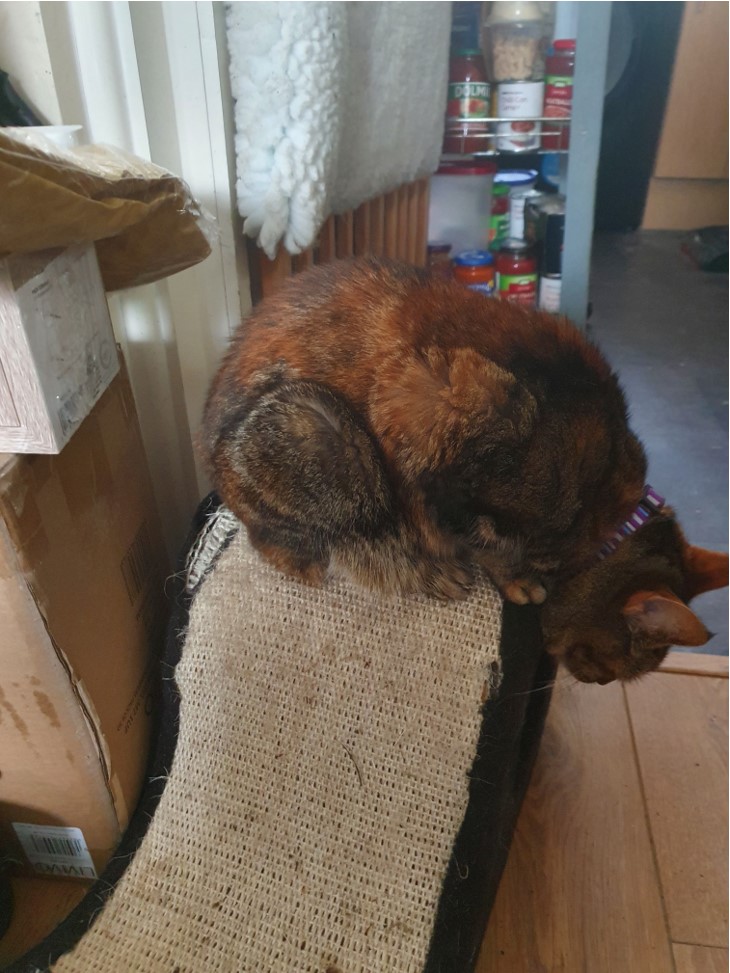 The cat may
be unable to raise his or her head properly, like Pixel in the photo to
the left.
The cat may
be unable to raise his or her head properly, like Pixel in the photo to
the left.
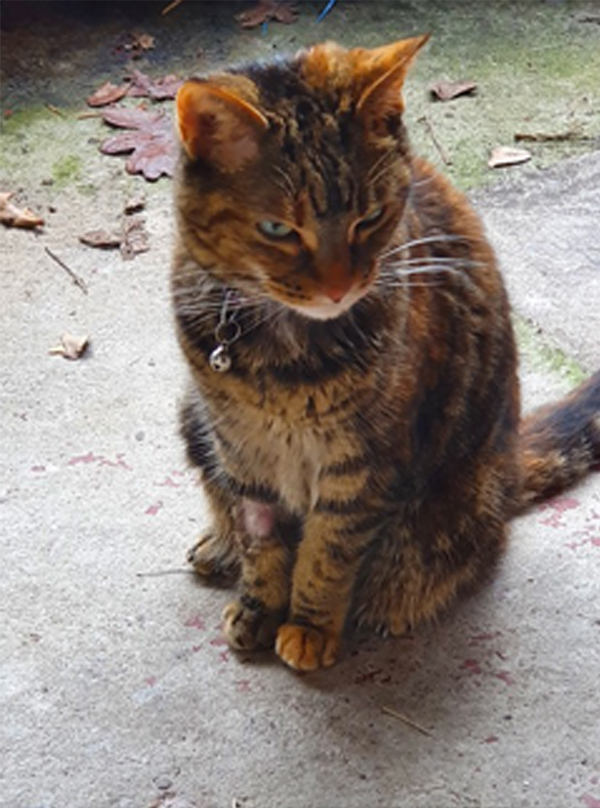 Here
is Pixel to the right looking much better after four days of treatment!
Here
is Pixel to the right looking much better after four days of treatment!